Understanding Closet & Storage Options
When choosing shelving for a closet, pantry, garage, laundry room, or office, three of the most common options are wire shelving, melamine-coated shelving and solid wood shelving. Each has distinct strengths, weaknesses, and ideal use cases. Here’s a clear breakdown to help you decide which is right for your project and budget.
Wire Shelving
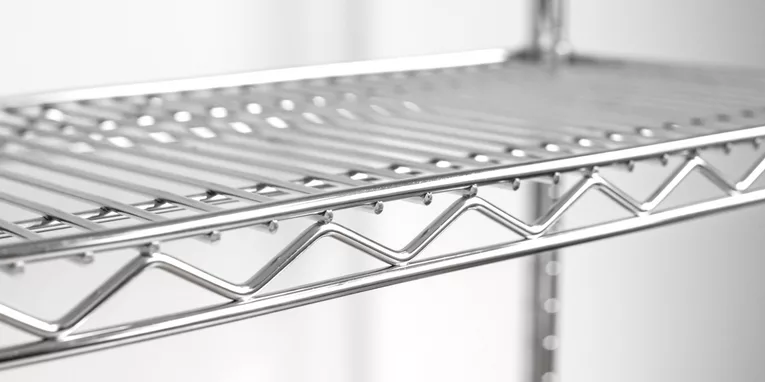
Construction
Epoxy-coated or chrome-plated steel wires welded into a grid pattern (usually 1″ spacing).
- Often adjustable in height and configurable with brackets, standards, and add-ons.
Pros
- Excellent air circulation → prevents mold, mildew, and dust buildup (great for pantries, linen closets, garages).
- Very strong — most residential wire shelves hold 50–100 lbs. per linear foot when properly installed.
- Easy to clean — just wipe or hose down.
- Highly configurable and adjustable without tools in many systems.
- Allows light to pass through (makes closets feel less “closed in”).
Cons
- Items with small footprints (spice jars, folded baby clothes) can tip or fall through the gaps unless you add liners.
- Industrial, utilitarian look
- Can leave indentations on soft items left in place long-term.
- Coated versions can eventually chip or rust in very humid environments.
Price Range Lowest cost of the three.
Best for Budget-conscious projects, garages, pantries, laundry rooms and anywhere ventilation and easy cleaning matter more than aesthetics.
Most budget-conscious? Yes — wire shelving wins hands-down on price.
Melamine Shelving
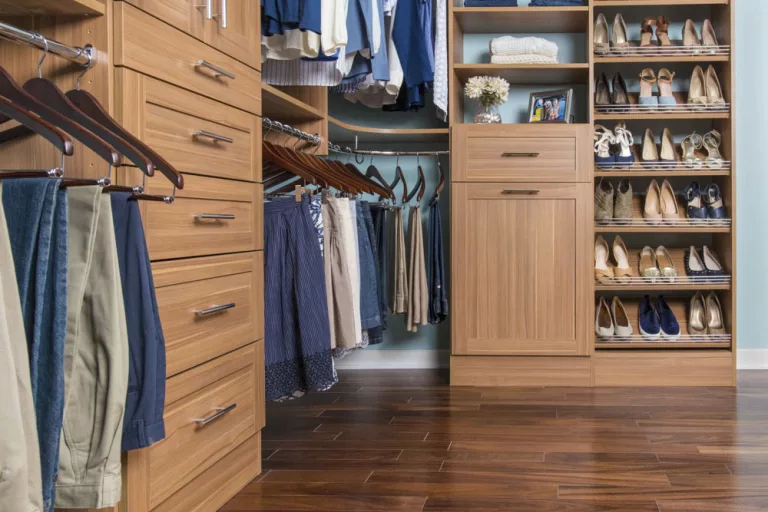
(Particleboard or MDF core with a thermally fused melamine finish — the classic “closet shelf” you see at big-box stores.
Construction
- Engineered wood core (particleboard or MDF) covered with a thin melamine resin layer that’s baked on for durability.
- Comes pre-cut in standard lengths (8 ft, 10 ft, 12 ft) and depths (11″, 14″, 16″, etc.) with bullnose edging.
Pros
- Smooth, cleanable surface — resists stains better than raw wood.
- Very inexpensive per linear foot (often only slightly more than wire).
- Uniform white or wood-grain finish looks tidy and brightens rooms.
- Easy to cut. But don’t worry. C. Bennett will handle that for you!
- Heavier items sit flat with no gaps.
Cons
- Poor moisture resistance — if the melamine edge chips or the core gets wet, it swells and disintegrates quickly.
- Can possibly sag over time on spans longer than 30–36″ unless supported every 24–30″.
- Heavy — a 12″ × 8 ft shelf weighs ~25–30 lbs.
- Once damaged, it can be difficult to repair convincingly.
Price Range Still very affordable. An 11-3/4″ deep × 8 ft white melamine shelf is usually $15–$25.
Best for Basic bedroom closets, linen closets and utility areas where looks matter more than wire but you’re still on a conservative budget.
Most budget-conscious runner-up — only slightly more expensive than wire but feels more “finished.”
Solid Wood or Furniture-Grade Plywood
Real hardwood boards, pre-finished birch/ maple plywood, or custom-built shelves.
Construction
- Solid hardwood (oak, maple, poplar, etc.) or high-quality cabinet-grade plywood with veneer or solid-wood edging.
- Usually stained, painted, or clear-coated.
Pros
- By far the most attractive and upscale appearance.
- Extremely strong — ¾” solid wood or plywood can span 36–42″ without sagging under normal loads.
- Can be refinished or repainted for decades.
- Adds real warmth and value to a home (especially visible areas like offices, living rooms, or primary closets).
- No off-gassing concerns once finished.
Cons
- Significantly more expensive.
- Heavier than melamine and requires more robust support.
- Susceptible to humidity changes (can warp or split if not properly sealed).
- Requires finishing (stain + polyurethane) if bought raw, which adds time and cost.
Price Range
- Pre-finished ¾” × 12″ × 8 ft cabinet-grade plywood: $70–$120
- Solid poplar or pine: $80–$150 for the same size
- Premium hardwoods (oak, maple): $150–$300+
Best for Primary closets, built-in bookcases, pantries you want to look custom, home offices, or anywhere aesthetics are the top priority.
Most attractive? Absolutely — nothing beats real wood for beauty and warmth.
Quick Comparison Table
| Feature | Wire Shelving | Melamine Shelving | Solid Wood / Plywood |
|---|---|---|---|
| Cost (8 ft shelf) | $15–$35 | $15–$30 | $70–$300+ |
| Strength (per ft) | Very high | Moderate | Very high |
| Moisture resistance | Excellent | Poor | Good (if sealed) |
| Aesthetics | Industrial | Clean & basic | Beautiful & upscale |
| Ventilation | Excellent | None | None |
| Adjustability | Highest | Low (fixed once cut) | Low–Moderate |
| Ease of cleaning | Easiest | Easy | Moderate |
| Best overall versatility | ★★★★★ | ★★★ | ★★★★ |
Final Recommendations by Situation
- Tightest budget + garage/laundry/pantry → Wire shelving (add clear plastic or melamine liners if needed).
- Bedroom or linen closet on a budget → Melamine (looks much better than wire with very little difference in cost).
- Want a custom, high-end look that lasts decades → Solid wood or furniture-grade plywood.
- Need maximum flexibility and future reconfiguration → Wire shelving systems.
- Best middle-ground compromise → Many people combine them: melamine or wood tops for folded clothes, wire lower shelves for shoes and bins.
Choose based on your priorities: budget, beauty, ventilation, or versatility. In most homes you’ll actually see all three used in different areas — and that’s perfectly fine!